The Myth of the Winner: Why a Tennis Point Can Turn Before the Final Shot
Tennis points often turn before a winner: learn how short replies, court position and pressure create the opening that makes the final shot possible.
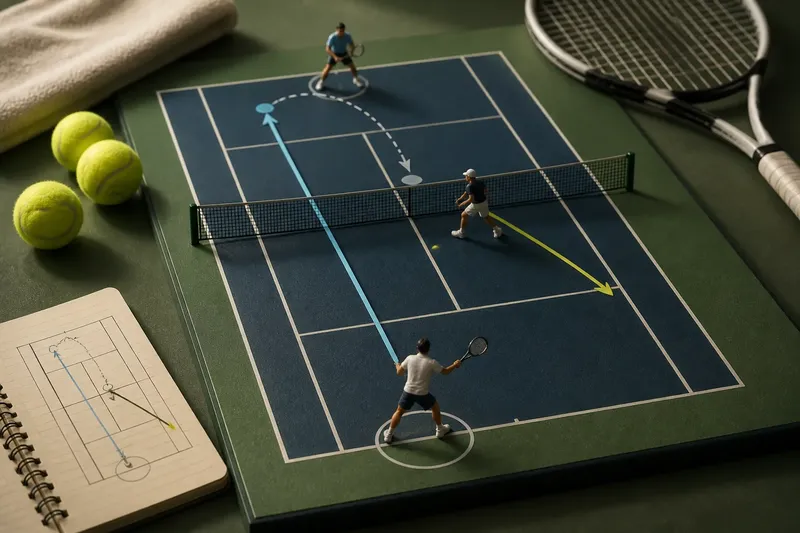
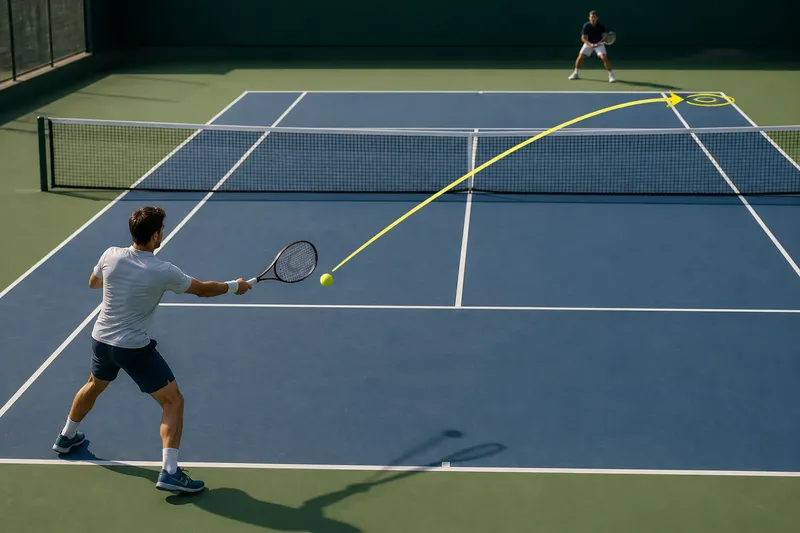
A tennis player steps inside the baseline, takes a ball early and sends it deep to the opponent’s backhand. The reply floats short. The player moves forward, angles the next shot away, and wins the point at the net. The last stroke gets the applause, but the point began to turn when the deep ball took away the opponent’s comfortable reply.
That is the useful way to read tennis tactics: not just by asking who hit the winner, but by noticing who shaped the next shot. A winner ends the point outright. A forcing shot changes the opponent’s options, often leaving a weaker ball that someone else can finish. The distinction explains why a rally can feel decided before the scoreboard changes.
What does it mean to shape a point without hitting a winner?
To shape a point is to influence where the opponent can hit from, how much time they have and which replies remain realistic. The player applying pressure may not strike the ball that ends the rally. Instead, they create a difficult position and make the next shot easier to attack.
Imagine a player receiving a rally ball near the centre of the baseline. They send it deep towards the opponent’s backhand, then recover towards the middle. The opponent has to retreat and stretch to reach the ball, so their reply lands shorter than intended. The first player moves forward and puts away that reply. The deep shot did not win the point, but it helped produce the ball that did.
There is no single shape to a successful point. A player might use depth to push an opponent back, height to disrupt timing, or a change of direction to make them move. Those choices are tactics: decisions about how to make the next exchange more favourable, rather than simply trying to hit harder.
Why can the decisive moment come several shots before the winner?
Each stroke changes the conditions for the next one. A ball that lands deep can keep an opponent behind the baseline. A shot aimed towards a player’s weaker side can reduce their options. A sudden change of pace can interrupt a steady rhythm. The effect may show up only on the following reply, when the opponent is late, off balance or unable to reach the ball cleanly.
Players also need room and time to recover after hitting. If one is pulled wide, the opponent may aim into the space left open. The first player’s shot can therefore create pressure even when it stays inside the court and is returned. The tactical value lies in the position it produces, not in whether it touches a line or lands beyond the opponent.
Watch the feet as well as the ball. A player who has to hit while moving backwards or reaching across the body has fewer comfortable choices than one who is set near the centre. A short reply often reveals that the preceding shot has made the opponent’s task harder.
How does a short reply create an attacking opportunity?
A short reply is a ball that lands nearer the net than the hitter intended, giving the opponent a chance to move forward and take it before it drops too low. It is not automatically an easy ball: the angle, height and spin still matter. But it can give the advancing player more time to choose an attacking target and less court to cover after the shot.
Moving forward can change the geometry of the exchange. From near the baseline, a player has to hit over a longer stretch of court. Closer to the net, they can take the ball earlier and use sharper angles. That position may also make the opponent feel rushed, since a reply has less time to travel past the approaching player.
There is a risk, too. A player who charges forward without reading the ball may be passed down the line or lobbed over their head. Good attacking play is not simply running to the net after any short ball. It means recognising a reply that can be approached under control, then choosing a position that covers likely answers.
What does court position tell you about who is controlling the rally?
Court position offers a quick clue to the balance of a point. A player near the baseline, able to step into the ball, can usually choose from a broader set of attacking replies. One several steps behind it may have to defend by returning the ball high or deep and buying time to recover.
Neither position tells the whole story. A player can be far behind the baseline by choice, using extra time to return heavy shots. A player close to the net may be exposed if the ball is too low or if the opponent has time to aim past them. Read position alongside the quality of the incoming ball and the player’s balance.
Recovery matters as much as the initial movement. After hitting wide, a player should try to return towards a useful covering position rather than admire the shot. The opponent may send the next ball into the open court. A strong shot that leaves its hitter stranded can give away some of the advantage it created.
How can you tell whether a player is building pressure or merely keeping the ball in?
Look for a pattern in the opponent’s replies. If they are increasingly hitting while stretched, retreating, or sending the ball shorter, the player across the net is probably building pressure. If both players keep returning from balanced positions with time to reset, they may be rallying without yet gaining a clear advantage.
Pressure can also appear in the direction of movement. One player may be moved from side to side, then made to cover forward. Another may be held deep with repeated balls that land close to the baseline. The point is not just that the opponent has moved; it is whether that movement has left them less able to make a purposeful next shot.
Try following three details through a rally:
- Depth: Does a shot push the opponent towards or behind the baseline?
- Balance: Are they set to hit, or reaching and recovering as the ball arrives?
- Position: Who has moved into a place that makes the next reply easier to attack?
- Reply quality: Is the opponent returning with control, or offering a shorter or more predictable ball?
- Recovery: After each shot, does the hitter regain a position that covers the likely response?
These clues help distinguish a deliberate pattern from a rally that simply happens to end with a clean strike.
Can a player control a point without hitting harder?
Yes. Control can come from placement, height, spin, pace changes and timing. A deep ball may make an opponent hit from farther back. A higher, slower ball can interrupt a fast exchange and give the hitter time to recover. A flatter shot taken early can take time away, even if it is not hit with exceptional force.
Changing direction can also move an opponent, but it is not the only way to create pressure. Repeatedly playing to a difficult area may be more effective than forcing a spectacular angle. The right choice depends on the incoming ball, the player’s own balance and the space available for the next recovery.
For a viewer, the useful question is not “Was that shot powerful?” but “What did it make the opponent do?” A shot that forces a defensive reply can be tactically strong even if it looks ordinary from the stands.
Why do players sometimes miss after they seem to have won the point?
A player who has created an opening still has to use it well. They may try to finish too soon, aim too close to a line or misjudge how quickly the opponent can recover. The pressure created by earlier shots does not remove the need to execute the final one.
Sometimes the apparent opening is not as large as it looks. An opponent can reach a ball that seems out of range, and a player approaching the net may leave space behind. A shot that looks like a routine finish can become awkward if it arrives low, close to the body or at an unexpected angle.
Misses do not necessarily mean the earlier tactic failed. The player may have earned a favourable chance but chosen a risky finish or mistimed it. Separate the quality of the setup from the outcome of the last stroke: that makes the rally easier to understand and keeps one error from erasing the work that came before it.
What questions help you read the point before it ends?
Which shot first changed the opponent’s position?
Look for the stroke that made the opponent retreat, stretch, or move away from the middle. That shot may be the real turning point, even if the rally continued for several more exchanges.
Why did the reply land short?
A short ball may follow a deep, awkward or well-placed shot, but it can also come from a poor choice or mistimed contact. Compare the reply with the opponent’s balance and location when they hit it.
Who has more room to choose the next shot?
The player balanced and closer to the ball usually has more options than one reaching while moving. Check whether that advantage comes from court position, timing or the quality of the previous stroke.
Did the final shot create the opening or use it?
A winner may be the stroke that finishes the rally, while an earlier shot made the winner possible. Try naming both: the shot that shaped the point and the shot that ended it.
How should you describe a point when there is no clean winner?
Describe the sequence rather than forcing every rally into a winner-or-error label. For example: “A deep shot pushed the opponent back, the reply came short, and the attacker moved forward to finish.” That account identifies what changed and how the last ball became available.
Say you are watching a rally where one player hits several controlled balls towards the other’s backhand. The opponent begins to stand farther behind the baseline and eventually floats a reply towards the service line. The first player advances and wins with a volley. Calling the volley the winner is accurate; noticing that the repeated backhand pressure produced the short ball tells you more about the tactic.
Use the same approach when the point ends with an error. Ask whether the player missed under pressure, tried to force a finish, or had a comfortable chance and simply failed to execute. A point can turn before the final shot, but the last decision still matters. Next time a rally ends, look back one or two strokes: the useful story may be there.