Why Crosscourt Leaves More Room for Error
Why crosscourt shots leave more room for error: understand the court geometry behind safer rallies and spot why a diagonal ball can miss.
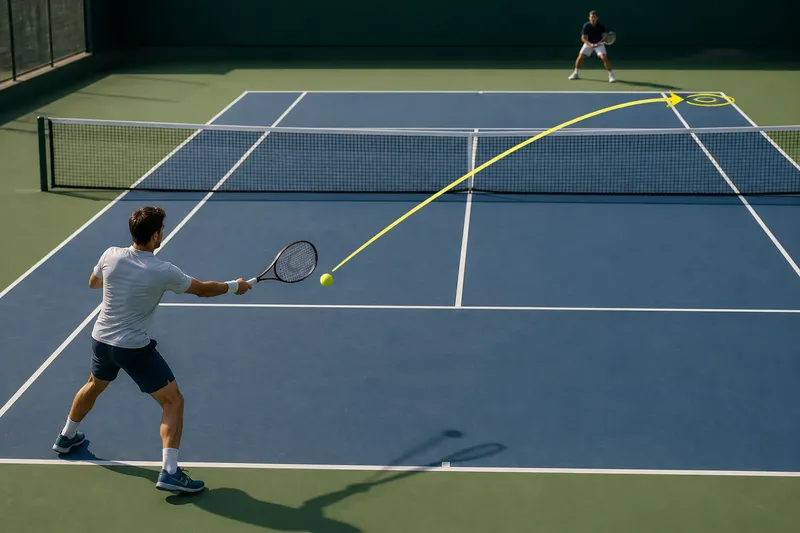
You’re watching a rally when one player sends the ball diagonally across the net, and it lands comfortably inside the far corner. The shot looks no harder than a straight one, yet it had more court to work with. Crosscourt tennis geometry explains why that diagonal route often gives a player a larger margin for error—and why rallies so often travel from corner to corner.
Crosscourt gives the ball a longer route
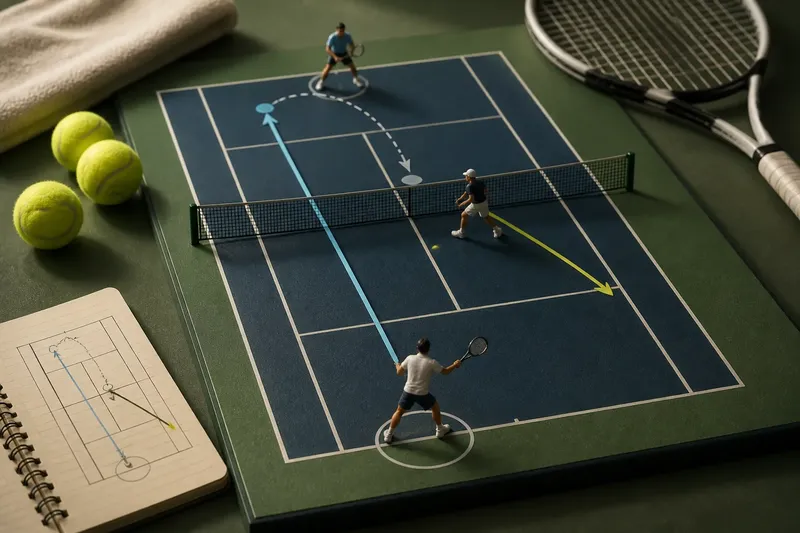
A tennis court is a rectangle divided by a net. A shot sent straight ahead travels roughly along the court’s length; a crosscourt shot travels diagonally from one side towards the opposite side. The diagonal between two corners is longer than the straight distance down the court.
That extra distance matters because the ball has farther to travel before reaching the far baseline. If it is struck with a similar arc and pace, the diagonal route can give it more space to descend into the court. A player can send the ball with some height rather than steering it narrowly over the net and still aim for a deep landing.
But “more room” does not mean that every crosscourt ball is safe. It describes a larger available path, not a force field around a badly aimed shot. Height, spin, pace and the point where the ball is contacted all affect whether it clears the net and lands in.
The court’s side lines also matter. In singles, the playable width is narrower than in doubles, where the outer alleys are included. A diagonal aimed towards the far singles corner has to stay within the singles boundary; the doubles alley does not make that target wider during a singles rally.
A crosscourt shot clips the sideline
A common problem is aiming too close to the far sideline. The diagonal may feel generous, but the ball still has to land inside the court. A player who looks only at the far corner can confuse a long flight path with a broad target.
The cause is often an aim that is too precise for the amount of control available. A rushed contact, a ball arriving at an awkward height or a wish to hit a sharp angle can pull the target towards the line. The longer diagonal helps with depth, but it cannot correct a ball sent too far sideways.
Try choosing a landing area inside the boundary rather than aiming at the line itself. A ball that lands a little farther from the sideline can still move an opponent out of position, while leaving room for a small difference in contact or direction.
Imagine you are returning a slow ball from the left half of the court and want to move your opponent away from the centre. Aim towards the broad area inside the opposite singles sideline, not at its painted edge. The expected observable result is a diagonal ball that can still pull the opponent wide without needing a line-hugging landing.
On a tennis broadcast, follow the ball’s landing spot rather than judging the angle by eye. A shot can look close to the corner from the camera’s view and still have landed well inside the line.
The ball lands short despite the long diagonal
Some crosscourt shots clear the net but drop short, giving the opponent time to step forward and attack. The longer route can help a ball travel into the far half, but a high, slow flight or a strike made without enough forward direction can still leave it short.
One cause is trying to lift the ball too much. A higher arc may reduce the risk of hitting the net, but if the ball loses forward drive, it can land before reaching the baseline area. Another cause is contacting the ball late or off balance, which can send it upward without much depth.
Watch where the opponent meets the next ball. If they can take it comfortably inside the baseline, your shot has offered them time and space, even if it landed in. A deeper landing usually makes the next contact less convenient, though the useful target depends on your position and the opponent’s response.
When the incoming ball is difficult, favour a controlled crosscourt shot with enough height to clear the net rather than forcing a sharp angle. When you have time and balance, direct it deeper through the diagonal lane. The practical adjustment is to change one thing at a time: aim deeper, or add more shape, rather than trying to do both through a last-second swing change.
A straight shot seems easier but feels tighter
A ball hit straight down the court has a shorter route than one hit diagonally. With less distance before it reaches the far baseline, a similar trajectory has less time to descend. That is why a straight shot can demand a flatter, more carefully controlled path if the player wants it to land deep.
This is not a reason to avoid hitting straight. It can be the right choice when the opponent leaves a clear opening, when a player is already positioned to cover the reply, or when changing direction will disrupt the rally. The trade-off is that the target may feel less forgiving, especially if the ball is struck with pace and travels close to the net.
For a casual viewer, the useful comparison is not “safe diagonal, risky straight” as an absolute rule. It is the size and location of the available target. Crosscourt often offers a longer diagonal and more room for the ball to travel; down the line may offer a more direct route into a gap, but that opening can be narrower.
A player who changes direction from a crosscourt rally also needs to account for their own position. Hitting straight can leave the opposite side open if the opponent reads it and returns quickly. The shot’s geometry and the court position work together: the same ball may be sensible from one spot and exposed from another.
Crosscourt rallies pull both players towards the sides
Repeated diagonal shots tend to move players towards opposite sides of the court. Each player follows the ball towards the side where they expect to make contact, then has to recover towards a position that covers the next likely reply. This creates the familiar corner-to-corner pattern.
The pattern is common because crosscourt combines a relatively spacious target with a direction that can move an opponent. It also tends to send the ball towards the opponent’s crosscourt side, where they may have a similar diagonal option in reply. The exchange can continue until someone changes direction, hits short, or is forced out of position.
For someone learning to follow a match, watch the players’ feet after each shot. If one has been pulled wide and is slow to recover, the opponent may have a chance to send the next ball into the open court. The important event is not merely that the ball went crosscourt; it is how much space the player has left to cover after making that shot.
Crosscourt does not automatically make a rally defensive. A player can hit a firm, deep diagonal ball to pressure an opponent, or use a slower, higher one to regain time. The direction supplies an option; pace, depth and the next position determine what that option does.
Why does crosscourt give a player more margin?
Is the diagonal actually longer than the straight route?
Yes. Between opposite corners of the rectangular court, the diagonal covers more distance than the lengthwise route. That gives a ball more room to travel before reaching the far baseline, though it still must land inside the relevant sidelines.
Does a crosscourt shot always have a bigger target?
No. The diagonal offers a longer route, but the target can become tight if a player aims close to the far sideline or tries to create an extreme angle. Aiming into the court rather than at its edge leaves a more usable margin.
Why do players hit crosscourt so often?
The route can combine a longer flight path with a direction that moves an opponent towards the side of the court. It is also a natural reply to another diagonal shot, so the rally may continue corner to corner until someone changes direction or creates an opening.
Is down the line always more difficult?
No. A straight shot can be effective when there is space to attack or the player is well placed to cover the reply. Its shorter route may make deep placement more demanding, and changing direction can leave another part of the court exposed.
Read the landing spot before judging the choice
To understand crosscourt tennis geometry during a rally, notice three things: where the ball crosses the net, how close it lands to the sideline, and whether the opponent is pulled out of position. Those clues reveal whether the player used the diagonal’s extra distance to reach a safer target, or chose a sharper angle that carried greater risk.
The same shot can serve different purposes. A deep diagonal may make the opponent hit from farther back; a wider one may stretch them sideways; a softer ball may buy the hitter time to recover. The landing area and the next movement tell you more than the word “crosscourt” on its own.
Once you start watching for the longer route, the repeated diagonals stop looking like automatic exchanges. They are choices about space: how much room the hitter wants, how far the opponent must move, and which part of the court may be open next.